


Why does hardly anyone in academic philosophy care about reading?

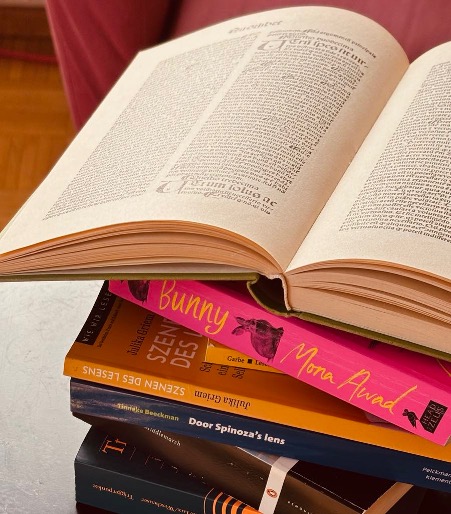
No, this is not about the decline of the occident, just a note about a curiosity in academic philosophy. Philosophy is a discipline in which reading is a key competence, not least in that philosophical exchange often focuses on the precise formulation of a premise or an argument. But while there are numerous guides on writing philosophy or on reconstructing arguments, there is next to nothing on reading. Given that different people reading philosophy often end up with contrary takes on texts (be they historical or contemporary) and given that much energy is spent on singling out proper takes, it is astonishing (to put it mildly) that there is so little reflection on reading. Or perhaps not? One of the first things I took in as a philosophy student is that philosophy is, by and large, an implicit culture where the rules of the game are not expressed but handed down by emulation. However, reading practices are not just about the rules of a specific game. Arguably, such practices make the often unreflected fabric of our intuitions and ways of life. So understanding our (current as opposed to some other) reading practice will not only yield an understanding of our particular ways but also of why we prefer certain texts and forms of reading over others in the first place. So why do we care so little? Preparing a larger project and a workshop on the issue of reading, I would like to share some encounters and musings.
Text production. – Having been educated as a historian of philosophy, first as a medievalist and, then, as an early-modernist, I have always been intrigued by the fact that texts have to be produced (before they can be consumed) by the historian. Becoming aware that the texts we read in books have come a long way (from picking and transcribing manuscripts into readable Latin, to a critical edition after choosing a leading manuscript, while referencing deviating manuscripts and sources, to a translation, a translation competing with other translations, being published), the material basis of reading and its availability, for whatever ideological or financial reasons, was already a thing to be pondered on. So, long before we can set eyes on a text, a number of decisions are made that include and exclude authors and whole traditions. When colleages say, they alter the canon by putting a new text on the reading list, I often want to ask why they think that the text is not already part of the canon, especially if it’s (fairly) readily available. But that’s by the by. The upshot is that reading presupposes the very availability of texts, and that’s a highly ideological matter already (or else tell me why everyone referencing medieval philosophy just references Thomas Aquinas).
“Why bother? – I just read.” – Still at Groningen University, I once asked colleagues whether we shouldn’t compose a reading guide detailaing how they approach their respective readings. The standard response was: “Why? I just read. There’s nothing much to say.” Asking further, they would often detail ways of reconstructing and formalizing arguments that were at once highly technical and subject to change. So, if you’re one of these poor souls thinking that there is one good way of reconstructing an argument in a text, just forget about it! It’s hard and ongoing work – no matter whether the text is by Plato or Ted Sider. The bottom line is that, no matter whether you’re a historian or a staunch analytic philosopher, any reading is highly contestable. Shouldn’t this fact give rise to a discussion of how readings are or should be constrained? You’d think so, wouldn’t you? But there is literally nowt (which is why I thought it timely to run a conference on the why and how of doing history of philosophy).
Texts versus arguments. – In my first year as a student of philosophy, I was asked to reconstruct an argument by Leibniz. We were supposed to use decimal numbers. My instructor (for those who care it was Lothar Kreimendahl) was not happy: Rather than presenting a list of numbered propositions, I gave what is nowadays called a narrative. I proudly rejected being graded for my supposed failure. But what this taught me was that the distance between the the text and its reconstruction can be very long and varied. I got out ok, but I still worry about the poor souls who think there is one true reconstruction or reading of a text. The upshot is that there is no clear way of getting from the text to a reconstruction of an argument. In fact, the text has to be seen in a certain context as speaking to a certain issue in the first place. But how is that known or established? Well, first of all it needs to be established, be it by your instructor, interlocutor or the stuff you’re reading about it. So there is no argument to be read off a text. The way of dealing with texts (as e.g. containers of arguments) has to be established already.
Who cares? – Of course, scholars dealing with different periods in the history of philosophy or reading cultures have to care. Doina-Cristina Rusu and Dana Jalobeanu, for instance, taught me that recipes and descriptions of experiments form a specific reading culture that needs to be studied in its own right in order to understand how things were understood and transmitted. The same goes for current philosophy, or so I think, but the implicit culture suggests otherwise. Yet, as long as this culture or cultures remain implicit, I think we’re not even doing proper philosophy (if doing philosophy includes studying the preconditions of one’s thought). So my guess is that we’re mostly doing what Kuhn took to be normal science. We unthinkingly emulate our teachers. But while doing so, we encounter the uncanny: students who don’t care about reading and even produce their writings with the help of LLMs. But funnily enough, in this very situation we insist on a proper distinction between the text reflected on and the text written. My hunch is that it’s our implicit reading culture that leaves us with very few responses to such misgivings. The bottom line is: We need an idea of how texts relate to thoughts etc. in order to handle the situation. But for that, we need to understand the preconditions of reading.
Not even didactics of philosophy? – While practitioners in different philologies and related disciplines seem to care greatly about reading practices, in philosophy the situation is so bad that not even didactics of philosophy have much to offer. Really? Obviously, or so I thought, philosophy teacher education would go into reading, no? Talking to some highly accomplished and experienced scholars in didactics like Vanessa Albus or Laura Martena, I learned that reading is not only thought of as problematic but often even actively pushed to the fringes in teaching philosophy. But why? Well, part of the reason is that philosophy is already taught in primary school, a level at which you won’t rely on texts. For later stages, a common resource is provided, amongst other things, by so-called sets of post-texts (Nach-Texte) which present summaries of a philosopher’s opinion (as one among other opinions). This way, a text by Kant might be reduced to the opinion of a talkshow guest in class. Not quite as drastic, but perhaps similar in spirit is Jonathan Bennett’s famous initiative of providing translations of classic texts from the early modern period from English into English, “prepared with a view to making them easier to read while leaving intact the main arguments, doctrines, and lines of thought.” This way you get, for instance, a simplified version of Locke’s Essay. (More than 15 years ago, I was involved in a translation project in which someone mistook these translations for proper texts and handed in a translation of a classic text from the simplified English into German. Luckily, we caught this in time.) The upshot is that (again, with notable exceptions) even didactics makes do with the miraculous move from the textual surface to the supposed argument or position – without much thought about interference by different possible reading strategies. At the same time, didactics is, strangely enough, a fairly young discipline that was still pushed to the sidelines during my student days.
Do philosophers still take pride in claiming not to have read that much? – Perhaps, then, the often rehearsed assumption that “thinking for yourself”, our supposed originality, doesn’t require or might even be hindered by too much reading still has great currency. Remembering school days, texts were often taken, not as a place of thought, but almost as a mere occasion for thinking. At the end of the day, I can only begin to suggest (in the time to come) why thinking about reading matters greatly and why it might still have been sidelined nonetheless, at least as a philosophical topic. But while my recent survey across philosophical disciplines on this issue was somewhat disconcerting (except for a few classics mainly from the French and some practicioners in the larger phenomenological tradition), I have high hopes when it comes to neighbouring disciplines.
Martin Lenz
On Martin’s personal blog, you‘ll find a number of posts on the topic of reading. For starters, you might want to search within the category Reading as a Social Practice. From now on, we’ll post pieces and curiosities on this topic here. So, do stay tuned!
Indeed, there are many lazy academics who is proud to not read after getting PhD or Master and converted to a regular employ in the philosophy departments.